Analysis of Magnetic Shielding Sheet Materials, Working Principles, and Applications
 2026.4.24
 Articles
 GOTREND
CONTEXT
1. Working principle of magnetic shielding sheet
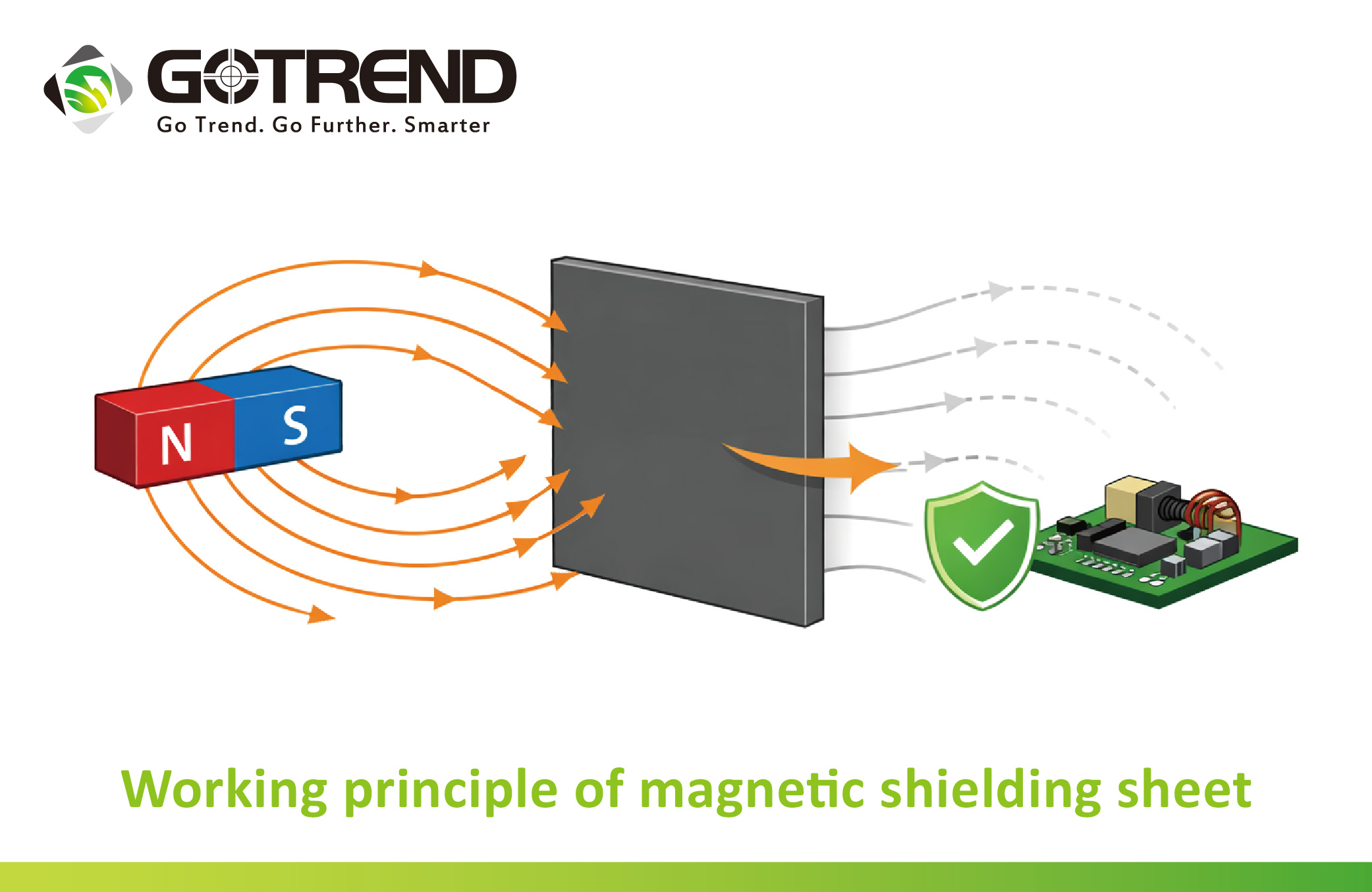
(1).Providing a high-permeability magnetic circuit (concentrating magnetic field): ireless charging (mainly magnetic induction technology) transfers energy through changes in magnetic flux between coils. According to Lenz's law, the magnetic field will distribute in a diverging spherical or ring shape in space. The magnetic isolation sheet is made of soft magnetic materials (commonly ferrite, amorphous, and nanocrystalline alloys). These materials have high magnetic permeability (high value of μi), meaning they allow magnetic field lines to pass through more easily than air.
(2).To prevent eddy current loss (isolation of metal): a magnetic separator is inserted between the coil and the metal (such as batteries, mid-frames). Since the magnetic separator itself is a high-impedance magnetic material, it intercepts the magnetic flux lines passing through the back of the coil. The magnetic field closes within the magnetic separator, without penetrating into the metal layer behind. Therefore, no motion that cuts the magnetic flux lines occurs in the metal, and thus no eddy current heating occurs.
(3).Reducing magnetic leakage (electromagnetic compatibility/EMI): Magnetic shielding sheets confine the magnetic field to a specific path, reducing "magnetic flux leakage". Some composite magnetic shielding sheets also incorporate wave-absorbing materials, converting high-frequency harmonics into weak heat energy for dissipation, thereby ensuring that NFC swiping does not fail and touch screens do not flicker during wireless charging operations.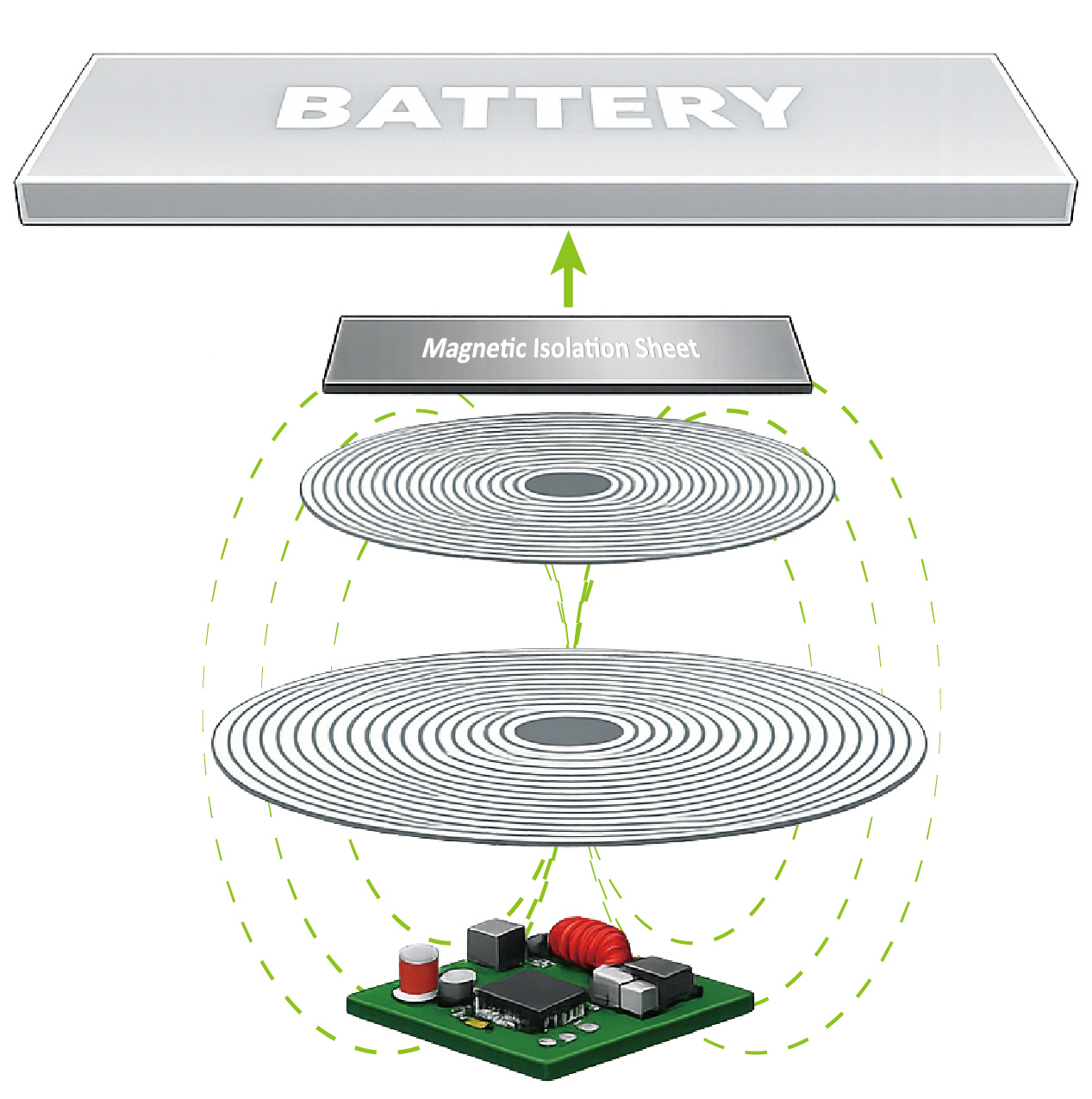
(1).Magnetic isolation sheets: ferrite magnetic isolation sheets, manganese-zinc ferrite, nickel-zinc ferrite (most commonly used for wireless charging / NFC)
Advantages: good insulation, no eddy current, stable at high frequencies (100 kHz–1 GHz), low cost, easy to sinter and shape, corrosion-resistant with a moderate magnetic permeability (500–3000), it exhibits good magnetic focusing/shielding effects.
Disadvantages: Hard and brittle, prone to cracking, unable to be bent, low saturation magnetic flux density (Bs ≈ 0.4–0.5T), prone to saturation at high power, poor thermal conductivity, and rapid increase in high-frequency loss
(2).Electrical steel (silicon steel) magnetic separator (motor / transformer / power frequency), non-oriented silicon steel (motor), oriented silicon steel (transformer, high permeability)
Advantages: High saturation flux density (Bs ≈ 1.8–2.0T), strong load-bearing capacity, goodmechanical strength, low cost, easy lamination processing, low power frequency (50/60Hz) loss,and highcost performance
Disadvantages: High-frequency (>1kHz) eddy current loss is significant, resulting in severe heating. Insulating coating is required, and the lamination process is complex. Its magnetic permeability is lower than that of amorphous/permalloy
(3).Amorphous/nanocrystalline alloy magnetic shielding sheets (high-frequency and high-efficiency, wireless charging/EMI), iron-based amorphous and iron-based nanocrystalline (Finemet, 10nm-sized grains)
Advantages: Extremely high magnetic permeability (μ=10⁴–10⁵), extremely low iron loss (only 1/–1/10 of silicon steel), ultra-thin (30μm–0.1mm), good flexibility, capable of punching/bending,stable over a wide temperature range, excellent performance at highfrequencies (1kHz–10MHz), andnanocrystalline with both high Bs (≈1.2T) and high μ.
Disadvantages: High cost of raw materials and processing, expensive price, brittle amorphous ribbon material, difficult processing, and general high-temperature stability (<200℃)
(4).Soft Magnetic Composite (SMC) / Magnetic Powder Core, Magnetic Isolation Sheet (Complex Shape/ High
Frequency), FeSiAl, Iron Powder Core, Molybdenum Permalloy, Nanocrystalline Powder Core
Advantages: Capable of being molded into complex 3D shapes, high design freedom, extremely low eddy current loss, and stable performance at high frequencies (1kHz–100MHz) Good insulation, no lamination, moderate mechanical strength.
Disadvantages: Low magnetic permeability (μ=20–300), average magnetic focusing ability, low density, low Bs (≈0.8–1.2T), higher cost than ferrite, below amorphous
(5).Permalloy (high μ alloy, precision shielding), nickel-iron alloy (Ni78% Mo2%, super-permalloy; Ni50%, permalloy)
Advantages: Extremely high initial permeability (μi =10⁵–10⁶), strong shielding against weak magnetic fields, extremely low coercivity, minimal hysteresis loss, thin ribbons that can be bent, and shielding
Disadvantages: high nickel content, expensive, low saturation magnetic flux density (Bs ≈ 0.8T), prone to saturation and oxidation, requires coating protection
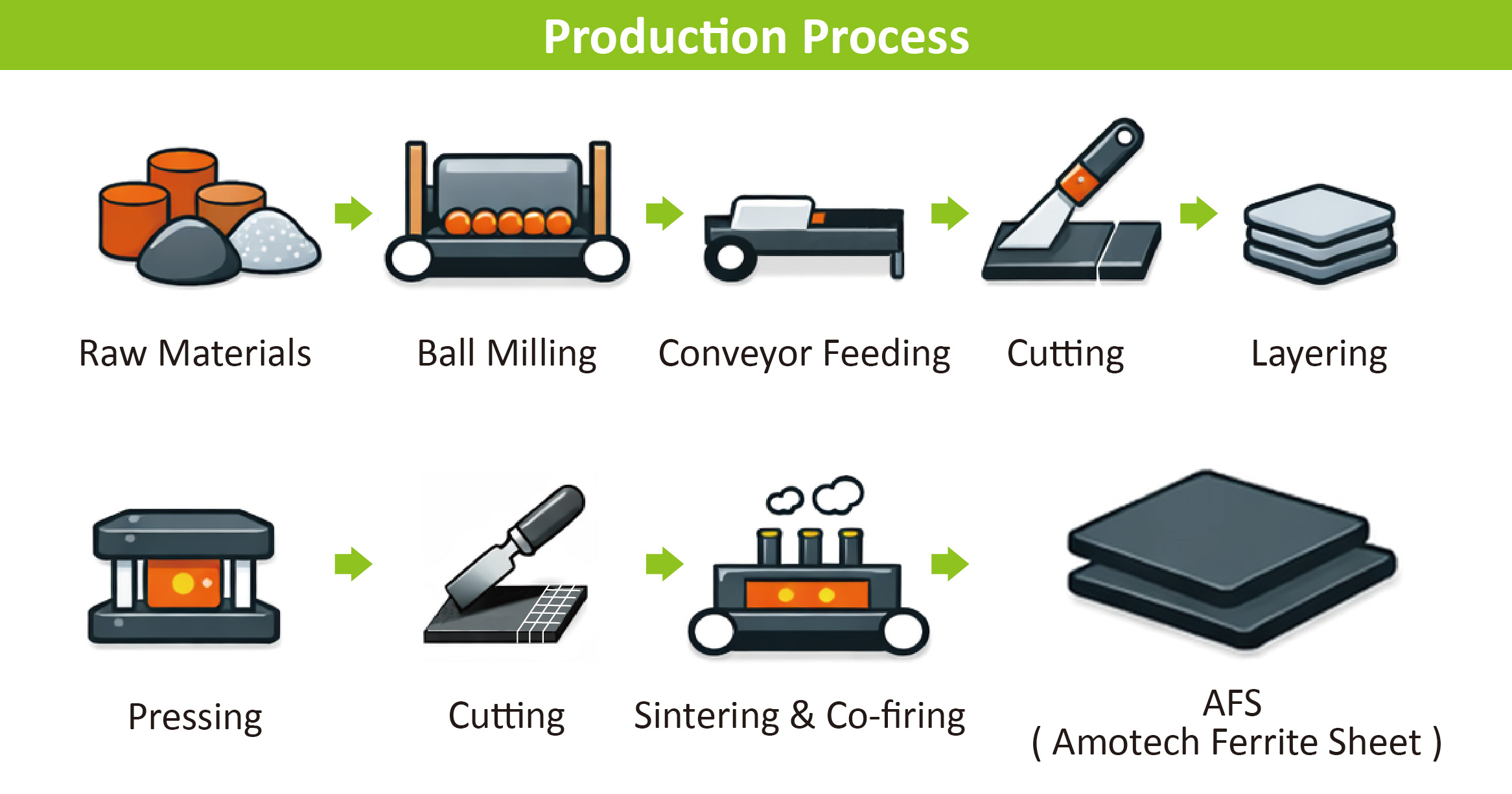
3. Production process of magnetic isolation sheet
4. Application of magnetic isolation sheet
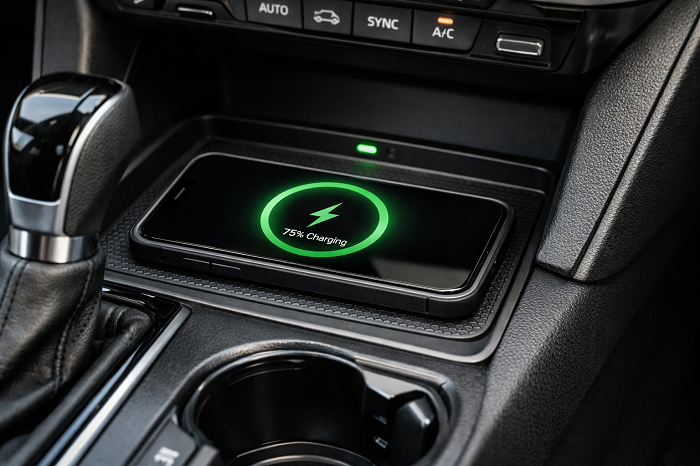
The selection of magnetic isolation sheets depends on specific application scenarios and requirements. In electronic products, commonly used magnetic isolation sheet materials include ferrite and nickel-zinc ferrite, which can effectively absorb and shield electromagnetic interference, ensuring the normal operation of the equipment. In medical equipment, higher demands are placed on magnetic isolation sheets, which need to have high magnetic permeability, magnetic saturation, and inductive intensity to ensure accurate measurement and safe operation of the equipment. Magnetic isolation sheets are widely applied in fields such as electronic products, medical equipment, and the automotive industry to control the propagation and influence of magnetic fields. Their function is to reduce or eliminate the impact of magnetic fields on other equipment or materials, thereby ensuring the normal operation of equipment and reducing interference.